
Want to Create a PTA Funded Reading Nook?
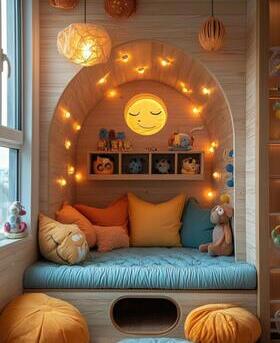
Quick Overview: Your reading nook should be designed to encourage reading for a range of ages and personalities. It should be a place that balances imagination and creativity with calm and focus. To achieve this, you should focus your investments in key elements including reading content, seating, lighting, book display and storage. The more budget conscious decisions can be made in accessories and soft furnishings. |
Here's How to Get It Right.
If your PTA has been looking for a project with lasting impact, a reading nook ticks a lot of boxes. It's visible, it benefits every child in the school, and when it’s done well, it becomes one of those corners of the building that children genuinely look forward to using.
These spaces support, encourage and promote reading as a fun activity, not just an academic requirement. Your reading nook has the potential to be an exciting and dynamic place of safety and imagination. But don’t feel daunted. The good news is that it doesn't take an enormous budget or an interior designer to get it right. What it does take is a bit of planning, some honest thinking about the people the space is actually for, and a considered approach to spending. Our tips will help you to formulate a plan and optimise your budget!
Reading Nook Design: What to Think About First
Before you buy a single cushion or commence the colour scheme debate, it's worth sitting down with a few questions.
Who is the space for?
A reading nook in a Reception classroom looks quite different from one shared across KS2. If your school covers a broad age range, you'll need to think about whether you're building one versatile shared space or smaller, class-specific corners. The former stretches your budget further; the latter tends to feel more personal and appropriate for each year group. Neither is the wrong approach. It depends on your space and how the school likes to operate, so needs to be carefully thought through.
Where will it live?
Location shapes everything else. A dedicated area in the school library gives you permanence and a sense of occasion; a cosy corner within each classroom feels more integrated into daily learning. Think about foot traffic, noise levels, and who will be responsible for maintaining the space day-to-day. A reading nook nobody supervises tends to become a storage nook fairly quickly.
How quiet does it need to be?
Perfect silence in a primary school is, of course, a fantasy. But you can make a meaningful difference with soft furnishings that absorb sound, a degree of physical separation from the main classroom, and clear expectations from staff about how the space is used. It doesn't need to feel oppressively quiet, just calm enough that children can concentrate.
What's the lighting situation?
Fairy lights are charming and children love them, but they are not adequate reading light. If your reading nook is near a window the natural light is brilliant, but seasonal! With these things in mind, it’s worth taking the time to install good, flexible lighting. Do this by creating layers of light. Warm and clear overhead lighting is an ideal base, with atmospheric additions like lamps, coloured lights, and string lights layered on top. This gives you the flexibility to cover focussed reading, cosy story times, and reading based events.
Choosing a Theme (Without Going Overboard)
A cohesive theme pulls a reading nook together and gives children something to engage with the moment they walk in. Popular choices include magical forests, space exploration, undersea adventures, or a pirate ship. But there really is no limit, and it’s nice to identify something that chimes with the character or history of the school.
A word of caution when it comes to a theme: they have a way of escalating. What starts as "a little woodland feel" can quickly become a full papier-mâché forest canopy and four hundred felt mushrooms. The theme should be a backdrop that encourages children to reach for a book rather than a spectacle that distracts them from doing so. Aim for atmosphere, not a stage set.
One excellent way to keep theming costs down while adding genuine character is to let the children contribute. A class made mural, hand painted plant pots, or even a display of favourite book cover drawings turns the reading nook into something the children feel ownership over. Which, as it happens, is also very good for getting them to actually use it.
Making the Space Work: Comfort, Storage and Choice
It’s easy to get carried away with aesthetics and in the process, lose focus of the purpose of a reading nook. The space should be designed to encourage curiosity and the enthusiasm to pick up a book.
Comfort doesn't mean chaos
You don't need to recreate a living room. A few practical and durable seating options like benches, floor cushions, and chairs, are enough. Different personalities prefer to sit and read in different ways. Story boats are a cute trend, but not all children will respond to reading in that position. Think about maintenance and cleaning when you choose seating, with wipe clean options and hard wearing materials.
Storage is not optional
The best reading nook in the world is useless if the books are inaccessible, disorganised, or always the same titles. Front facing shelves where children can see book covers have a significant effect on how many books children actually pick up. There are so many clever ways to store books within units and seating solutions. Plus, with regular rotation the librarian or teacher can keep things fresh and exciting.
For a reading nook to serve all children well, the selection needs to be genuinely broad:
- A range of reading levels, clearly but not obtrusively signposted
- Fiction and non-fiction, including topics children have chosen themselves
- Books that reflect a range of backgrounds and experiences
- If certain titles are consistently popular, having two or three copies is worth the spend
How will the space be used and how could it be used
A reading nook that's only opened on Friday afternoons isn't living up to its potential. Think about how it slots into the school's daily routine. That might be independent reading time, a reward for positive behaviour, a destination for storytime with story sacks, or a space for focused or guided reading. Your new reading nook has the potential to not only serve the school’s current patterns, but also to open up new activities and opportunities.
Budget Planning: Spend Smart, Not Big
PTAs work hard for every pound raised, and a reading nook budget should be treated with respect. The high/low principle that many interior designers use is genuinely helpful here: spend more on the things that need to last and do a job (like shelving, seating, and books), and less on the things that are decorative or easily replaced (like bunting, plant pots, and cushion covers).
Here's a rough guide to setting your budget priorities:
Category | Priority | Notes |
Books and reading materials | High | This is what the nook is for, so don't cut corners here |
Seating | High | Needs to be durable, safe, and varied |
Shelving / storage | High | Front facing shelves make a real difference; bespoke builds can optimise the space available |
Lighting | Medium–High | Adequate reading light is crucial. Invest in flexibility. |
Decorative elements | Low–Medium | Great opportunity for child made art and low cost touches |
Theming accessories | Low | Less is more, and it’s good to have the flexibility to refresh without a big re-design |
A few other things worth keeping in mind:
- Shop around. It sounds obvious, but comparing suppliers for furniture and storage can produce significant savings. Educational suppliers aren't always cheaper than general retailers.
- Be flexible on specifics. If the red seating is half the price of the blue and the children won't lose any sleep over it, that's probably a reasonable compromise.
- Check what the school already has. Display boards, storage units, and even some furniture may be able to be repurposed. It's always worth double checking before buying new.
How To Get Your Reading Nook Funded
Planning your spend is one thing, but what if you don’t yet have a pot of money to use? Well, that’s where we come in with a Christmas card campaign! The more creative and streamlined your fundraising project, the better received it will be - and that translates in a higher total raised at the end. All the better for your reading nook!
The team at IQ cards have been there: as parents, PTA members, and lucky recipients of personalised cards and gifts! We know the products that are popular, and the systems that keep stress levels low. We’ll supply you with a full project pack, step-by-step guide, easy online payments, and great quality products at the end. Everything to help you to raise enough funds for a fantastic reading nook!
If you're planning a reading nook project, an IQ Cards campaign is a natural fit to optimise your income. You can easily communicate to parents exactly what their purchases are supporting, and we make it super easy for you to administrate. Head here to register your school.
Frequently Asked Questions
How much does a school reading nook typically cost to set up?
This could be anything from a few hundred to a few thousand pounds. It depends on the size of the space, whether you're starting from scratch or building on what's already there, and how ambitious the design is. The most useful thing you can do is set a realistic budget before you start shopping, and prioritise the books and seating above everything else.
How do we keep the reading nook fresh once it's set up?
Regular book rotation is the single most effective thing you can do. Tie some selections to topics the class is currently studying. Add seasonal decorations and an interactive recommendations board as easy, low cost ways to make the space feel current.
Can IQ Cards work with smaller PTAs or informal fundraising groups?
Yes! IQ Cards works with PTAs of all sizes, including those who are just getting started. You don't need an existing infrastructure or a large volunteer team to run a campaign. The process is designed to be manageable for busy parents and school staff, and the IQ Cards team can talk you through it. Have a look through our testimonials to see how it works in practice, or get in touch directly if you have questions about how our projects might work for you.
The benefits of early planning for School Christmas card fundraisers

The Best Skills To Teach Your Children at a Young Age

Ditch the desks: How outdoor learning boosts wellbeing

Class of 2026: Celebrating our school leavers and what makes them special

The best summer activities to do with your children

The rising cost of living: How initiatives, schemes, and charities support pupils