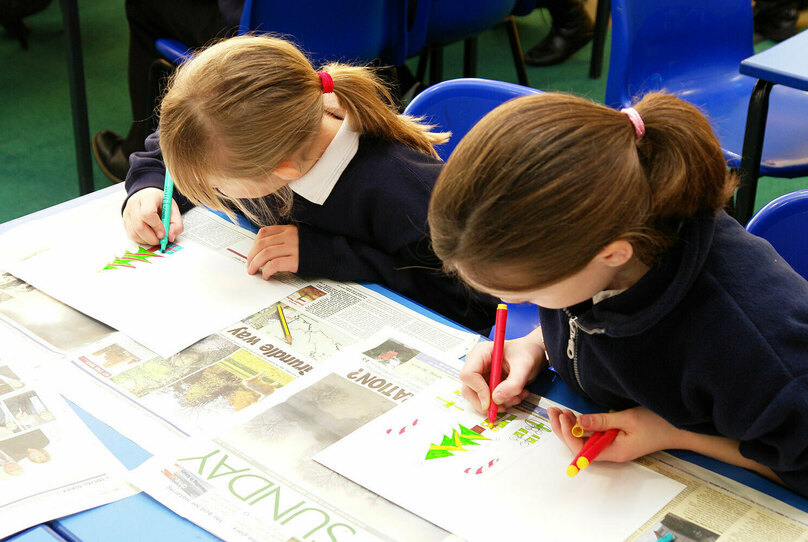
Ditch the desks: How outdoor learning boosts wellbeing
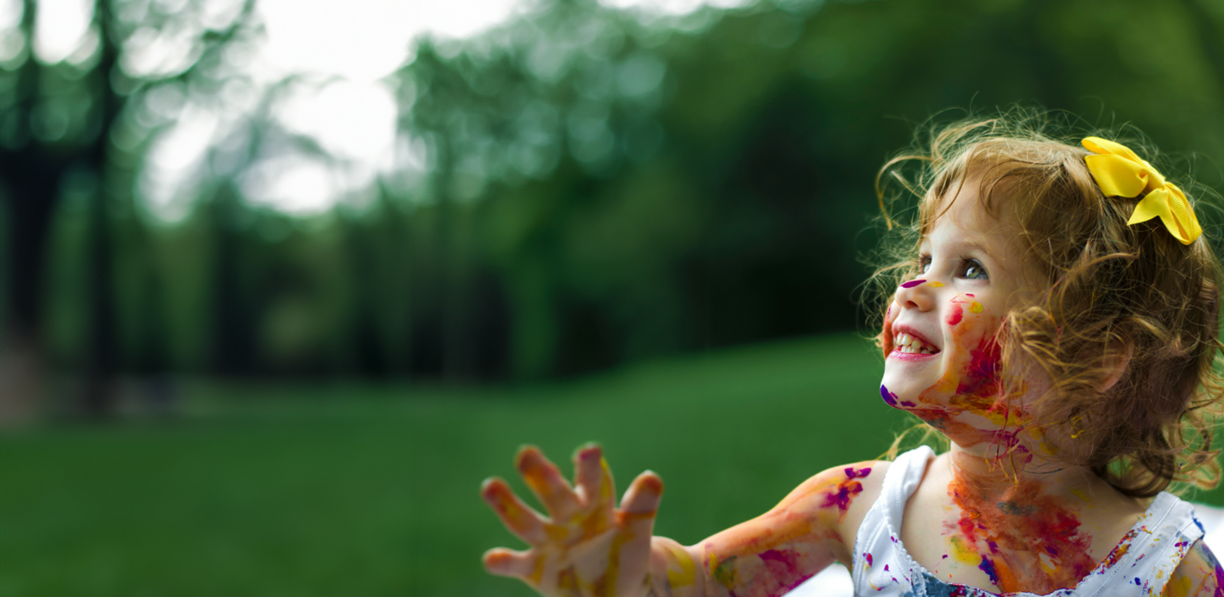
Quick Overview: Outdoor learning delivers core benefits to children's mental health, confidence, social skills, and academic engagement. A 2021 Natural England study found that 85% of young people agree that being in nature makes them very happy. Outdoor learning can support fundraising in two ways. Firstly with nature-inspired art activities such as leaf printing and bark rubbings that give children richer, creative experiences to use for an IQ Cards fundraising project. Secondly through the creation of a forest school area, which is a fantastically positioned project to focus fundraising activities on. |
Most PTAs know this feeling well: you want to do something genuinely useful for your school, something with a lasting impact, but between finding willing volunteers, managing the admin, and keeping everyone engaged, even the best idea can start to feel like hard work before it has begun.
At IQ Cards, we have worked alongside school fundraising groups across the UK since 2009, and here is something we think is worth knowing. The most successful campaigns start with the children and their innate creativity. Outdoor learning, which is already gaining significant traction in UK primary schools, both enhances the wellbeing of a class, and results in creative thinking and artwork that can actually help you to raise funds. Indeed, building a forest school area within your school grounds is a wonderful project to raise funds for.
In this article, we walk through the evidence behind outdoor learning and show you how to connect those experiences to a fundraiser that is easy to run and rewarding to see through.
Why outdoor learning matters: the evidence
We all have an instinct that fresh air does children good. As it turns out, the research backs this up rather emphatically.
A 2021 Natural England study found that 85% of young people agree that being in nature makes them very happy, and that those who spend time outside at least once a week are significantly more likely to report very high levels of happiness. For PTAs thinking about the whole-school picture, these are not abstract statistics. They represent the children your fundraising supports.
An international systematic review of nearly 150 studies, highlighted by the charity Learning through Landscapes, confirmed that nature focussed outdoor learning produces significant and sustained improvements to student wellbeing, motivation, and self-confidence over the course of an academic year. Crucially, children who did not participate in outdoor programmes did not experience the same improvements.
Natural England's own Children and Nature Programme found that children who spend regular time outdoors show improvements in school attendance, behaviour, and social skills alongside their academic engagement.
These are not small gains. They are the kinds of outcomes that shape a child's experience of school, and they are well within reach for any school with access to a garden, a field, or a nearby green space.
The five core benefits
Wellbeing and mental health. Time in nature reduces stress and anxiety in children (and adults!) and sustains improvements to their happiness and emotional resilience.
Child development. Outdoor environments build confidence, independence, and communication in ways that structured classroom settings find harder to replicate.
Inclusivity. Organic, sensory-rich outdoor spaces are accessible to a broader range of learning styles, giving children who sometimes struggle indoors a genuine chance to shine.
Curriculum enhancement. Science, art, geography, and maths all come to life outside. A leaf becomes a study in symmetry. Bark becomes a texture lesson. The curriculum is deepened by this work.
Nature connection. Children who learn outdoors develop a lasting relationship with the natural world, along with a sense of environmental responsibility that is worth nurturing.
From the school garden to your fundraising campaign
Why creativity makes fundraising work
The best PTA fundraisers are the ones where parents feel genuinely glad to spend their money. A Christmas card printed with a child's own artwork is not just a product; it is a memory. This is something a grandparent keeps in a drawer for years. That emotional connection is what drives orders, and it is what brings schools back to IQ Cards year after year.
Creativity is not a cute extra in this process. It’s what makes the whole thing work. And outdoor learning turns out to be one of the most reliable ways to spark it.
Nature-inspired art activities that translate beautifully into products
The natural world gives children an extraordinary range of starting points for original artwork. Here are three activities that have remained popular through the generations.
- Bark rubbings and leaf prints — children place paper over textured bark or leaves and apply crayon or paint
- Natural collages — collecting leaves, petals, seeds, and grasses and arranging them into seasonal compositions gives children complete creative ownership, with results as individual as the children themselves
- Observational nature drawing — sitting with a sketchbook in a garden, field, or woodland and drawing what is actually there develops artistic confidence alongside a quiet attentiveness that is wonderful to witness
Each of these activities produces artwork with unique visual interest: strong lines, organic textures, unexpected colour combinations. These are exactly the kind of pieces that look wonderful on a printed card, mug, or tea towel. Or if it doesn’t fit with your project ideas, it’s certainly a fantastic activity to get in the creative zone!
Building a forest school area: a fundraising project with lasting impact
Of course, the natural world can be an inspiration for your next fundraising project. A forest school area is a fundraising goal that is both meaningful and visible. It’s something that grows with the school: a space children return to week after week, season after season, building confidence, curiosity, and a genuine connection to the natural world.
For PTAs, it also has a useful clarity. Parents understand what they are contributing towards. Teachers can immediately see how it supports learning. And children, perhaps most importantly, feel a sense of ownership in helping to create it.
A forest school area does not need acres of woodland. Many successful spaces begin with a modest corner of a field or garden, shaped thoughtfully over time. Logs for seating, a simple fire circle (where appropriate), natural shelters, and tactile planting can be introduced in stages, making it an ideal project to fundraise for incrementally.
Benefits of a forest school area
The most effective fundraising campaigns are those where the outcome is easy to picture. A forest school area, similar to a reading nook, offers exactly that. It is a place where children will:
- Build dens and problem solve together
- Take part in hands-on science and nature observation
- Develop independence through managed risk
- Experience calm, reflective moments away from the classroom
For parents and teachers alike, this translates into happier, more confident children, learning in a way that feels both purposeful and joyful.
Your simple ‘how to’ guide
Creating a forest school area can feel like a large undertaking, but these spaces vary enormously in scale and scope. Follow these basic steps to work out a space that works for your school:
- Start with a site
Identify a usable outdoor space within the school grounds. It does not need to be large, but it should feel distinct from the main playground. - Incorporate curriculum opportunities
Speak with teachers or the senior leadership team about how the space will be used. This ensures it supports learning activities as well as play. - Sketch a simple plan
Focus on a few core elements:
- Seating (logs, stumps, or benches)
- A gathering point (circle or open area)
- Natural features (plants, textures, loose materials)
- Shelter (even a basic canopy or willow structure)
- Build in phases
You do not need to complete everything at once. Many schools start with seating and planting, then add features over time as funds allow. - Connect fundraising to progress
Share updates with parents as each stage is completed. Photos, short notes, and children’s reports help to maintain momentum. Consider breaking the project into corresponding fundraising elements, for example £150 target for sensory plants, £300 target for log seating etc. - Invite participation where possible
Some schools involve families in planting days or simple build sessions. This strengthens the sense of shared ownership.
A project that grows over time
What makes a forest school area particularly powerful is that it is organic and ever changing. It evolves with the children who use it. New plants are added. Structures are adapted. Activities change with the seasons.
From a fundraising perspective, this means it is not a single campaign, but a continuing story your school community can be part of. And from a child’s perspective, it becomes a core part of their school experience.
How does IQ Cards fit in?
Fundraising with an IQ Cards project is straightforward, and that is something we have worked hard to get right.
Your school fundraising group first registers for a Christmas project with IQ Cards, and we provide everything needed to get started, including templates, guidance materials, and a dedicated support contact. Children create their artwork in class, ideally as part of an outdoor learning session or as a follow-up creative activity inspired by one. That artwork is then returned to us and parents can subsequently browse, choose products, and pay directly online.
So there’s no cash handling for you; no chasing envelopes around the school office; no spreadsheets for your PTA to manage at midnight.
From original artwork, IQ Cards produces a range of professionally printed products: for example Christmas card packs, ceramic mugs, 100% cotton tea towels, cushion covers, magnets, sticky labels, and more. Every product is made to a consistently high standard, which matters, because quality is what keeps families ordering and keeps PTAs recommending us to neighbouring schools.
So when it comes to fundraising, consider starting outside. Use the natural world to inspire creativity, or a forest school addition as an ambition for your funds. Our fundraising opportunities are there to make things easier.
Register your school for an IQ Cards project including our Christmas ‘design-your-own’ project or class tea-towel project at iqcards.co.uk and discover how we can support your fundraising goals.
FAQs
What are the main benefits of outdoor learning for children's mental health?
Outdoor learning has strong, acknowledged benefits for children's mental health, and improvements in student wellbeing, motivation, and self-confidence. Regular outdoor learning also reduces anxiety and supports emotional resilience, particularly in primary aged children.
How do forest school areas improve student engagement?
Outdoor environments, especially forest school areas, are inherently multi-sensory, which means children engage through touch, sight, smell, and movement rather than passive listening or reading alone. Research shows that outdoor learning leads to improvements in school attendance, focus, and academic engagement.

The rising cost of living: How initiatives, schemes, and charities support pupils

The Best Skills To Teach Your Children at a Young Age
Class of 2026: Celebrating our school leavers and what makes them special

Want to Create a PTA Funded Reading Nook?
The best summer activities to do with your children

Better together: How your PTA can properly welcome new parents this Autumn